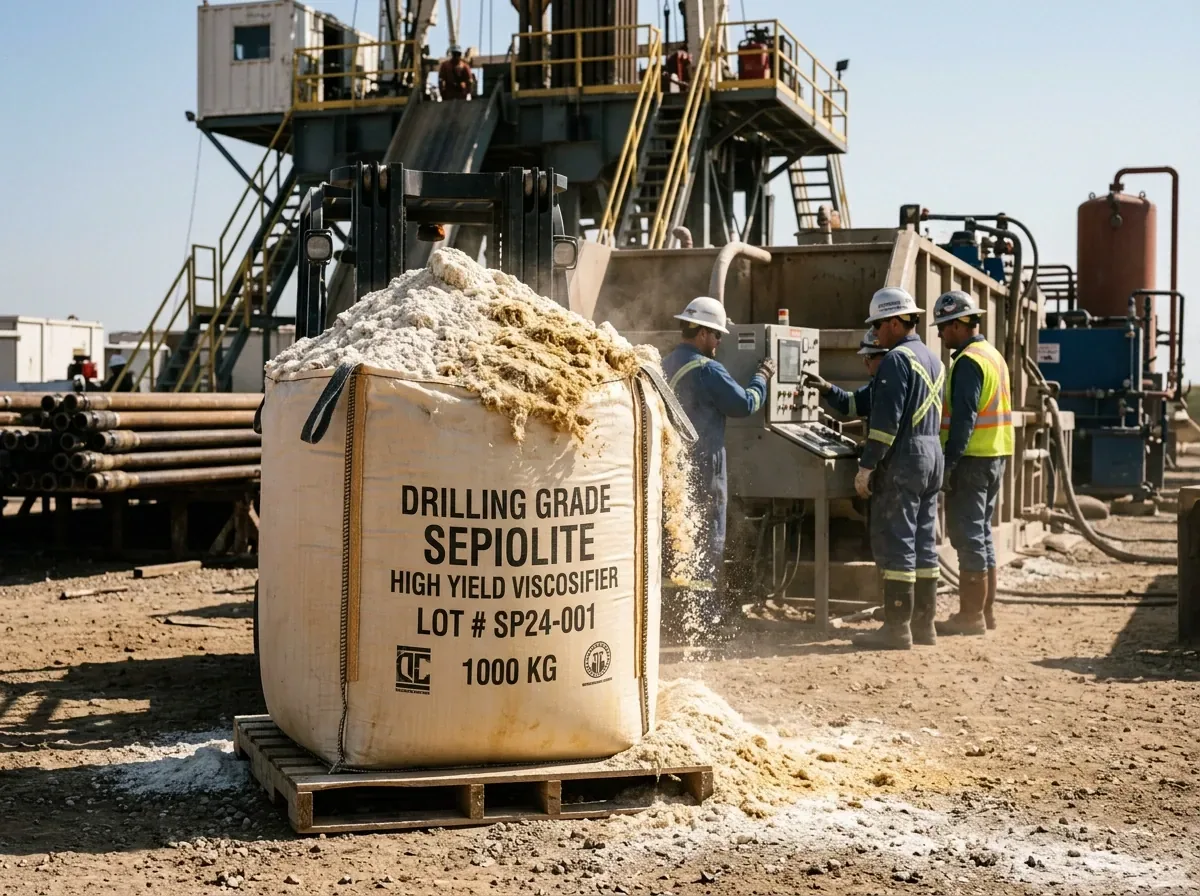
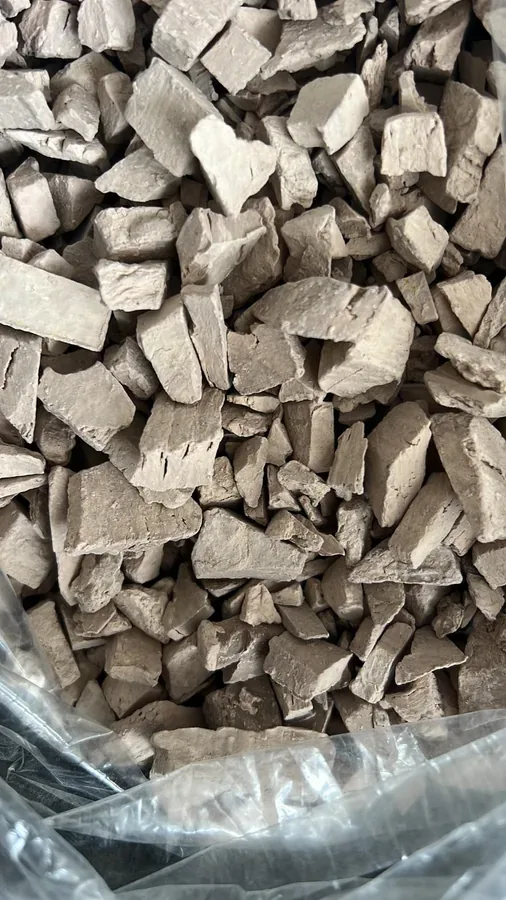
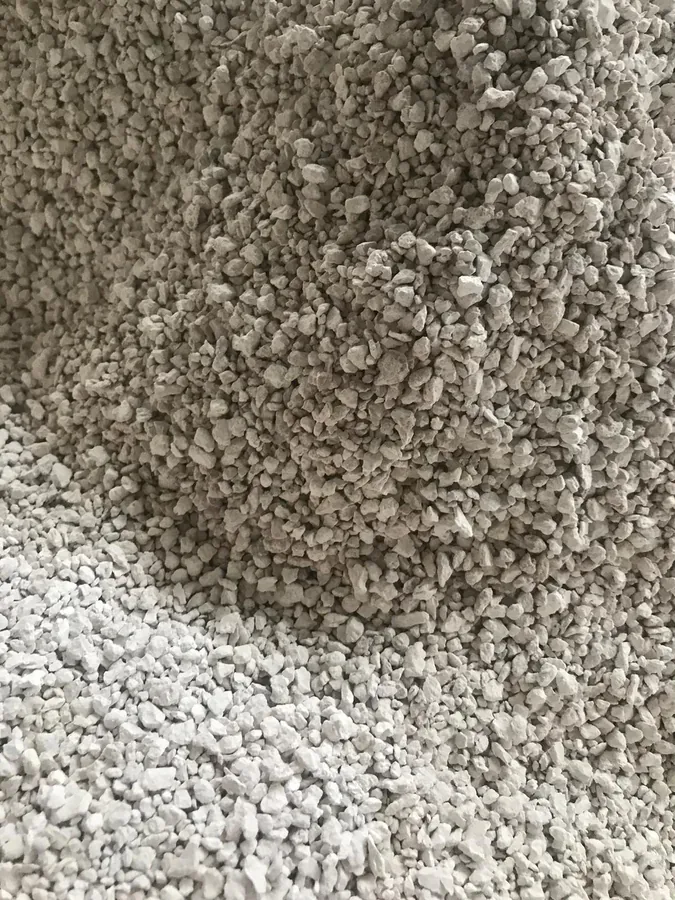
Sepiolite for Oil & Gas Drilling
The Only Mineral That Performs in Saturated Salt
Sepiolite is the only clay mineral that maintains full rheological performance in saturated saltwater environments — a property that makes it irreplaceable for drilling through salt domes, evaporite sequences, and geothermal reservoirs. While bentonite flocculates and loses viscosity in brine, sepiolite's unique fibrous crystal structure remains stable, providing consistent hole-cleaning and cuttings suspension.
Why Sepiolite for Oil & Gas Drilling
Salt-Saturated Mud Performance
Bentonite loses over 80% of its viscosity-building capacity in NaCl concentrations above 10%. Sepiolite, by contrast, maintains full rheological properties even in fully saturated brine (26% NaCl). This makes it the only viable viscosifier for salt dome and evaporite drilling.
Extreme Temperature Stability
Sepiolite retains its fibrous structure and viscosity-building properties at temperatures up to 300°C (572°F). This thermal resistance makes it ideal for deep wells, geothermal drilling, and HPHT (high-pressure high-temperature) applications.
Excellent Hole Cleaning
The fibrous morphology of sepiolite creates a highly shear-thinning fluid that flows easily during pumping but thickens instantly when circulation stops. This ensures effective cuttings transport to surface while preventing barite sag during connections.
Low Formation Damage
Sepiolite mud systems produce a thin, low-permeability filter cake on the wellbore wall. The fibrous particles bridge pore throats effectively without invading the formation, preserving reservoir permeability and enhancing production potential.
Spill Absorbent & Remediation
Beyond drilling fluids, granulated sepiolite is widely used on drilling rigs and production platforms as a universal absorbent for oil, diesel, hydraulic fluid, and chemical spills. It is non-flammable, chemically inert, and approved for maritime disposal.
API 13A Certified Supply
Our drilling-grade sepiolite is manufactured, tested, and certified to API Specification 13A — the global standard for drilling fluid materials. Every shipment includes full test certificates for yield point, apparent viscosity, and filtrate loss.
From Mine to Your Application
Premium Ore Selection
Only high-purity, high-fibre-length sepiolite seams are selected for drilling grade. These provide maximum viscosity yield per tonne, reducing total mud cost.
Controlled Drying
The ore is dried in rotary kilns to precise moisture content. Over-drying damages the fibrous structure; under-drying causes lumping. Our process targets the optimal 8–10% moisture window.
Precision Milling
Dried ore is milled to API-specified particle size distribution. The grind profile is engineered to maximise hydration speed and viscosity development in the mud system.
API 13A Testing
Every production batch is tested to the full API 13A specification: yield point, apparent viscosity, 600/300/200/100/6/3 RPM readings, filtrate loss, and moisture content.
Certified Packaging
Packaged in 50kg multi-wall paper bags, palletised and shrink-wrapped. Each pallet carries batch certificates. Shipped FOB Mersin or Samsun Port.
Typical Specifications
| Parameter | Value |
|---|---|
| Standard | API Specification 13A |
| Yield Point (Bingham) | ≥ 15 lb/100ft² at 30 g/350ml |
| Apparent Viscosity | ≥ 10 cP at 600 RPM |
| Moisture | 8–12% |
| Filtrate Loss | ≤ 15 ml / 30 min |
| Salt Tolerance | Full performance at 26% NaCl |
| Packaging | 50kg bags / 1t big bags |
Frequently Asked Questions
Bentonite is an excellent viscosifier in freshwater mud systems but flocculates and loses all gel strength in salt concentrations above 5–10%. Sepiolite maintains full rheological performance even in fully saturated brine (26% NaCl). If your well encounters salt formations, sepiolite is your only option.
Yes. Sepiolite is fully compatible with standard drilling fluid additives including barite, caustic soda, filtrate loss reducers (CMC, PAC, starch), deflocculants, lubricants, and most specialty chemicals. Consult our technical team for specific formulation guidance.
For a complete sepiolite-based mud system, typical dosage is 40–60 lb/bbl depending on required rheology. For supplementing an existing water-based mud system with salt tolerance, 15–25 lb/bbl is typical. Our field engineers can optimise dosage for your specific conditions.
Yes. We supply to offshore operators across the Mediterranean, Black Sea, Caspian, North Sea, and West Africa. Our packaging and documentation meet all offshore logistics requirements including IMO and MARPOL compliance.
Sepiolite is the preferred viscosifier for geothermal wells due to its combined salt tolerance and thermal stability. Many geothermal reservoirs produce highly mineralised brines at temperatures exceeding 200°C — conditions where only sepiolite provides reliable mud performance.
Ready to Explore Sepiolite for Your Application?
Our technical team provides samples, specifications, and formulation guidance tailored to your industry needs.